The 中運 (Zhōngyùn, 中 meaning China, pronounced the same as as “loyalty”, 運 meaning transport) was an Chinese indigenous transport aircraft developed and build by the 2nd AFAMF during the 2nd world war. Zhongyun is sometimes also read / romanized as “Chung Yun”.
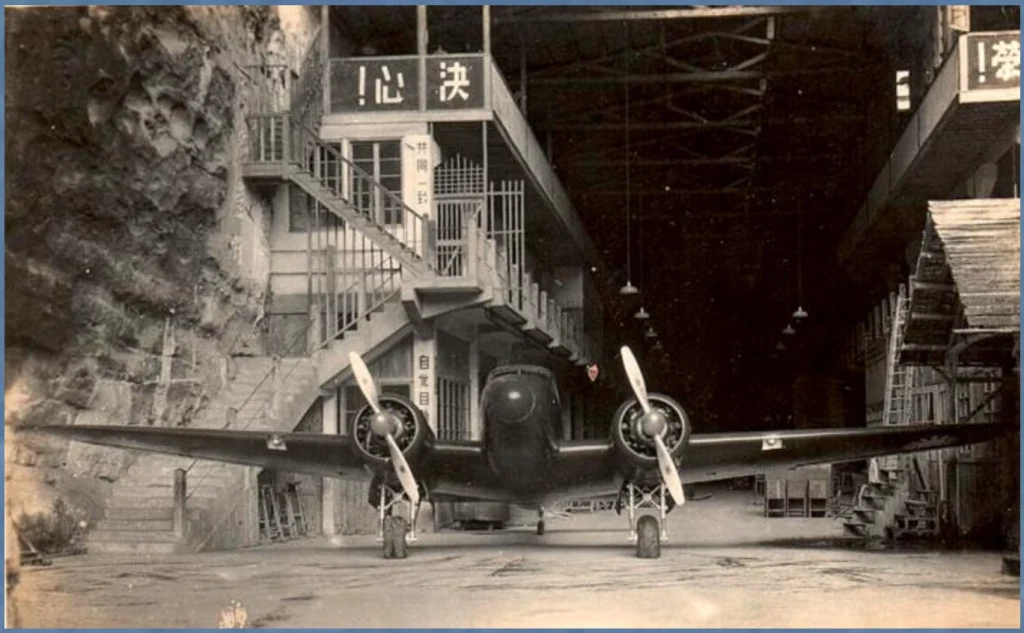
By 1941 the Japanese invasion of China was in full swing. The SINAW aircraft factory had retreated to near Chongqing 2 years prior, being renamed to the 2nd AFAMF. While the factory, now build in a large cave system was never found by the Japanese, transportation was still exceedingly difficult with high prices and hampered manufacturing as a result. With no sign of help from either the Soviets or the Americans in providing transportation equipment.
Development
In the winter of 1941, design was started on a new transportation aircraft, the ” Zhongyun” under chief designer 林同驊 (Lin Tonghua) and deputy chief designers 顧光復 (Gu Guangfu) and 高邦俊 (Gao Bangjun). They were aided by more than 20 designers, including 陸孝彭(Lu Xiaopeng)、張桂聯(Zhang Guilian) and 程寶蕖(Cheng Baoqu).
The shortages and inconvenient transportation hampered the design. To speed it up, design and production was done at the same time, with the designers often visiting the workshops to answer questions and gather feedback for the design. By the autumn of 1942, they had essentially completed the overall design, theoretical lofting, aerodynamic calculations, load distribution, weight allocation, and structural analyses. The factory lacked a wind tunnel, so all aerodynamic data was calculated with the help of books and journals. Due to wartime shortages, the plane was primarily made of wood and fabric, with only the control surfaces made from aluminium alloy. The engine, landing gear, flight instruments and propellers where American and / or Soviet spare parts (Sources don’t agree). Work on the aircraft was temporarily suspended until 1943 due to reasons, likely ongoing shortages. The prototype, Zhongyun 1 was finished in august 1944.
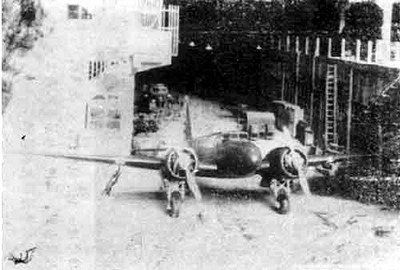
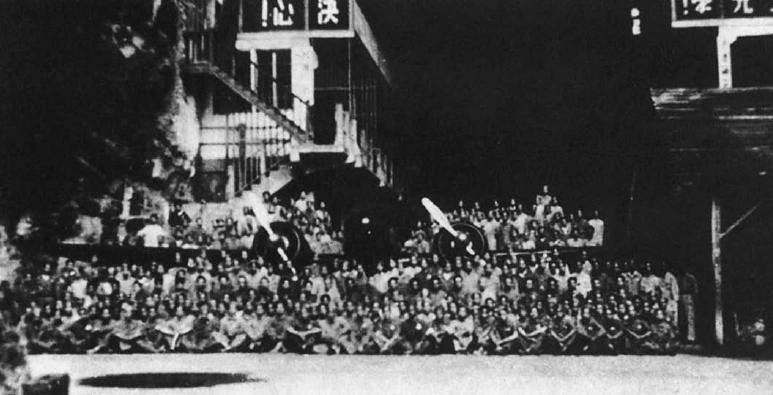
The factory did not have an airstrip, so the aircraft was disassembled and the parts were loaded into trucks. Over the course of 7-8 days, travelled to 白市驿机场 (Báishì Yìjīchǎng, Baisihi airport1). To avoid Japanese reconnaissance they travelled by night. At Baishiyi the aircraft was re-assembled and readied for test flights.
Test Flights
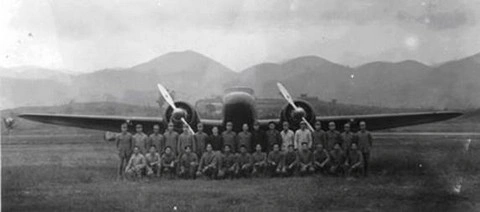
The maiden flight took place in October that year, with test pilots 李興唐 (Li Xingtang) and 林同驊 (Lin Tonghua), and inspector 林同驥 (Lin Tongji, cousin of Lin Tonghua2). The first flight went well and landed back again at Baishiyi after 20 minutes. After several more test flights the factory decided to ferry the plane to Chengdu. Confident in the team and the aircraft, the factory director personally joined the flight. The flight took place on November 2 and took a bit over 50 minutes, faster than the DC-2.
At Chengdu the plane was tested further with favourable results, with praise from 王助 (Wang Zu), the vice president of the National Aviation research institute at the time. The plane was officially designated ‘C-0101’. The aircraft was formally transferred to the Nationalist Air Force Air Transport Squadron at the end of 1946.
There were plans to convert the Zhongyun 1 into a bomber, but this was abandoned due to the war ending and financial difficulties.
The fate of the Zhongyun 1 after being pressed into service is unknown.
Zhongyun 2
A second plane was developed based on the first prototype, the Zhongyun 2. It was broadly similar. It kept the wooden construction due the continuing shortages. For the landing gear it used a set from a P-40B fighter. The tail wheel, flaps, interior and safety features where upgraded. Two Pratt & Whitney engines where used to power the 2nd plane. Plans for a third, fully metal plane with a top speed of 353 km/h were also drafted, but this never came to fruition.
The Zhongyun 2 made its maiden flight on February 19 1948 in Chongqing experiencing only minor vibration issues. it was designated ‘C-0102’.
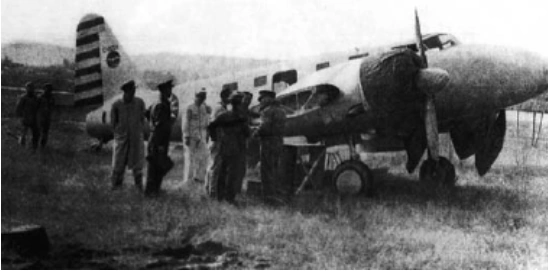
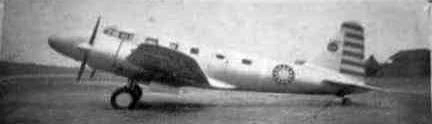
After the capitulation of Japan, the Nationalist air force received a large amount of American C-46 and C-47 aircraft. Combined with the fact that production and resources stayed scarce due to the ongoing Nationalist-Communist civil war, interest in the Zhongyun faded and the aircraft was never taken into mass production. At the end of 1948, the factory relocated back to Nanchang, the Zhongyun returning as well. When Nanchang was captured by the Communists during the Yangtze River Crossing campaign, the plane was still at Qingyunpu Airfield. There it was test-flow by PLA test pilot 劉煥統 (Liu Huantong). It planned to be ferried to Hankou, but a malfunction forced the plane back to Nanchang. It’s fate afterwards remains unknown, but it is not preserved and was likely scrapped at one point.
Replica
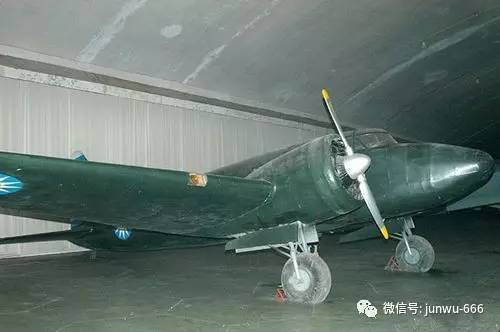
A replica of the Zhongyun 1 was constructed in 1993, which is currently on display in the China Aviation Museum in Beijing.
Sources
- Xiaoci, H. 中國飛機外篇(之三十)中國自行設計的第一種雙發運輸機—中運一號及中運二號 (Chung Yun-1,Chung Yun-2). (n.d.). https://cwlam2000.epizy.com/cafx30.htm
- 海孔洞往事:战机工坊. (2024-11-10). https://mp.weixin.qq.com/s?__biz=MjM5MTA3Mzg0MA==&mid=2653132429&idx=2&sn=1f268f918aacc7f660971058d9732477