Hispano Aviación HA-1112-K1L Tripala
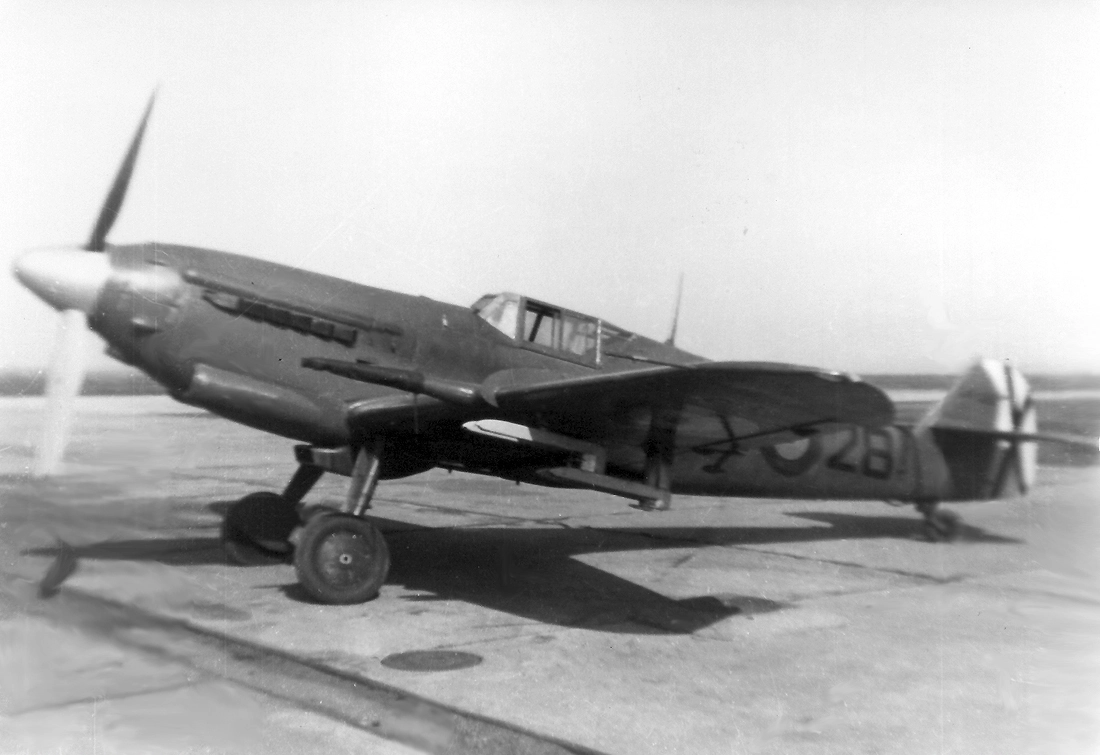
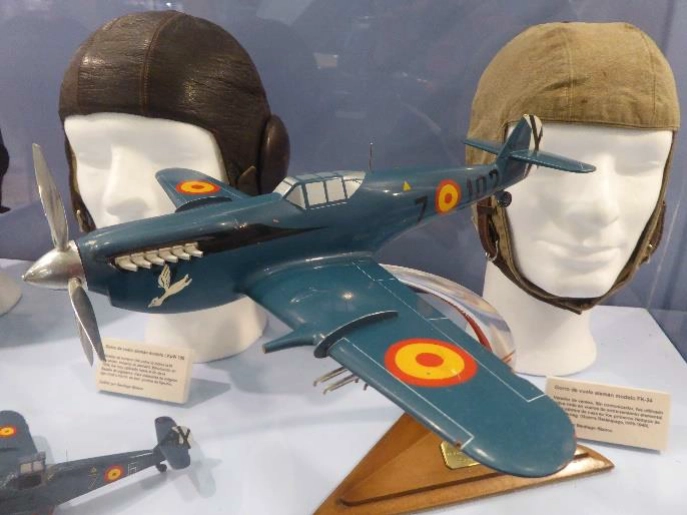
The Tripala first flew in 1951. It sported an overall scheme of a medium blueish gray colour with black numbering. What colour this is is quite elusive. Some sources call it Barrack Grey, but this is more of a catch-all term spanning a range of colours and not the specific colour used on the Tripalas. It often depicted quite similar to RLM 02.
As far as I know no contemporary colour photographs survive, and the scheme as used on the museum model might not be accurate; it depicts a light grey to very pale green.
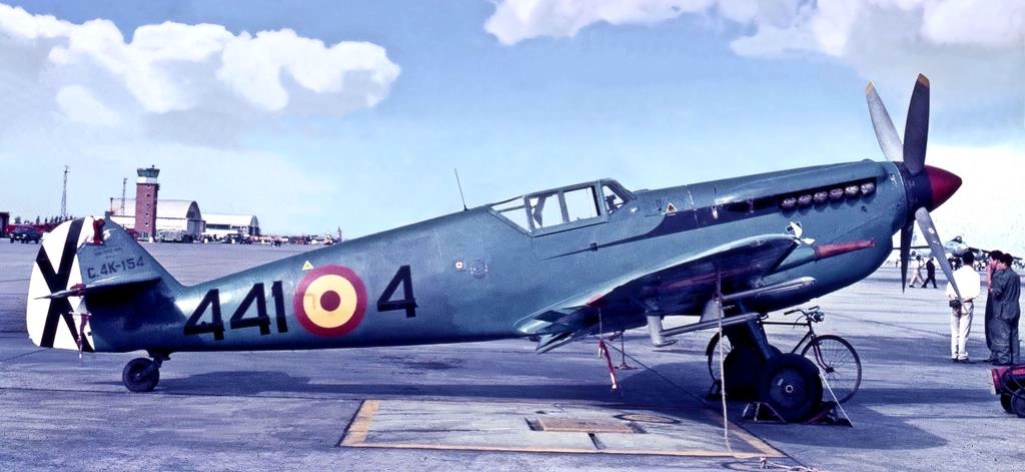
Hispano Aviación HA-1112-M1L Buchón – Azul № 9
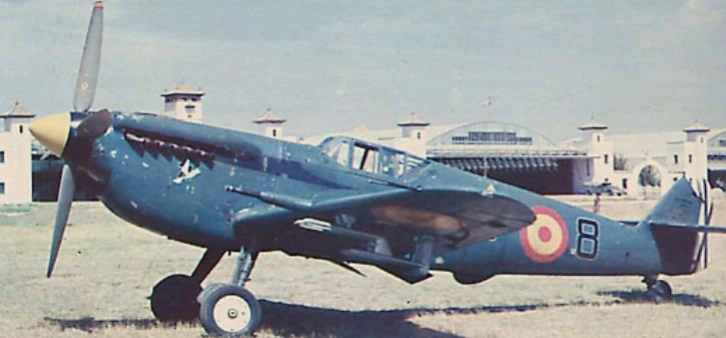
The Hispano Aviación HA-1112-M1L Buchón were the final iteration of the Ha-1112 and outfitted with imported Rolls Royce Merlin engines. In Spanish service they were also known as C.4K. These aircraft were originally painted in an overall dark blue camouflage. The exact shade of this is a source of discussion. The aircraft were delivered in 1959 in a bluish primer by the Hispano Aviación plant in Seville, but were quickly painted in their final coat of Azul No. 9 NH-36-08-01 (Blue nr. 9). The colour was however commonly described as Cobalt blue or Peugeot blue. The paint was of somewhat poor quality (maybe because it was an automotive paint). As a result, between 1962 and 1963 the scheme was phased out in favour of the aluminium over light blue scheme.
Sometimes HA-1112-K1L Tripalas are also depicted in this scheme. This is wrong; only Buchónes where painted blue.
Peugeot blue
The Peugeot blue may or may not have been an Automotive paint. Two different theories exist:
- The commander of 71 Squadron, Lieutenant Colonel Isodor Comas Altadill, had some connections with the local Peugeot dealership in Seville, and use those connections to procure the paint to paint the planes in his unit.
- Someone, either a Hispano executive or Ltd. Comas, had a Peugeot sports car in the same colour, which he really liked.
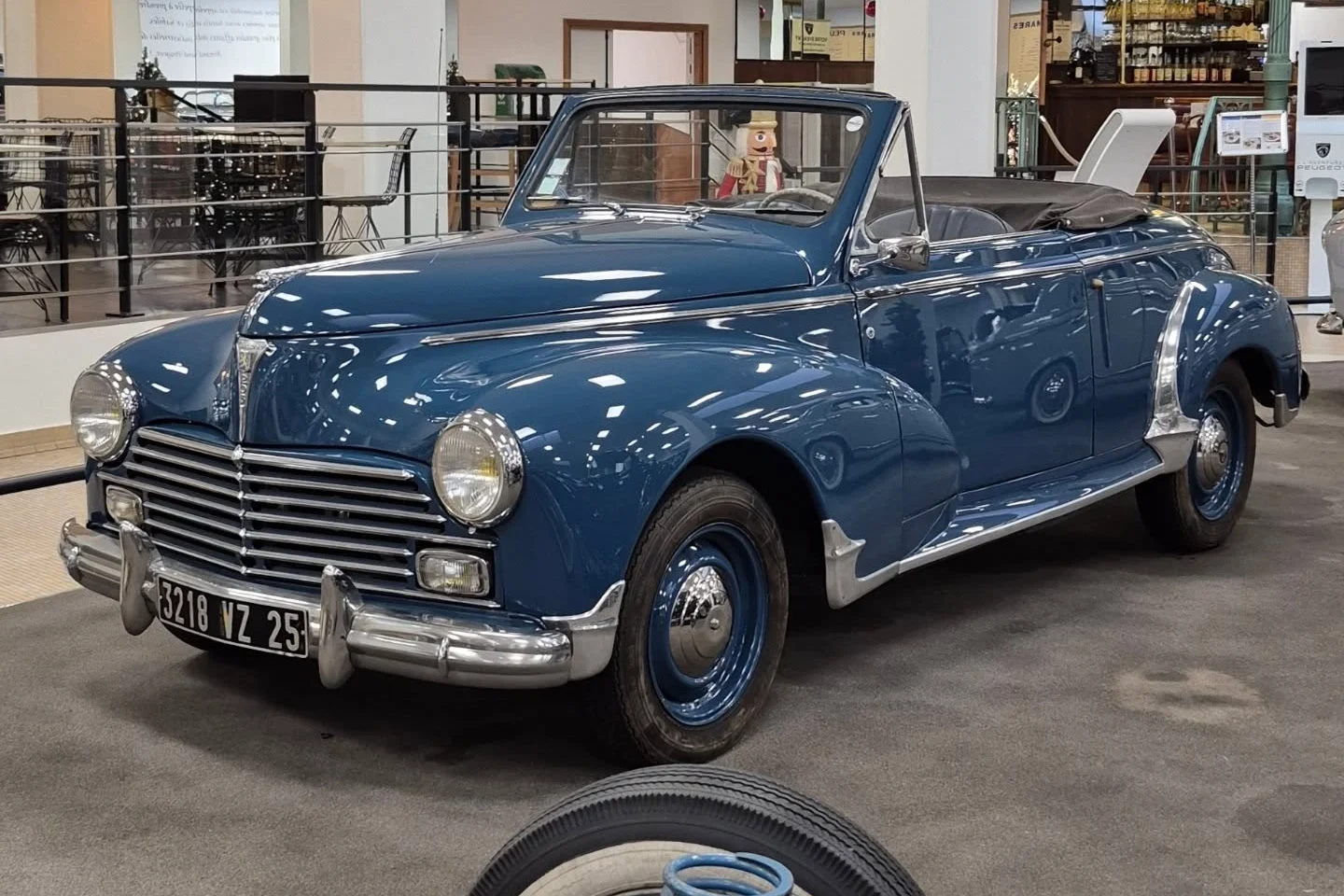
In anyway, Azul No. 9 was, or was close in shade to a blue automotive paint used by Peugeot before or in 1959. Multiple, slighly different paints exist, none are very well defined online. A Peugeot 203C at the Musée de L’Aventure Peugeot, Sochaux, France, shows a colour which closely matches a contemporary model held at the Fundación Infante de Orleans. This was made in the same factory, so likely the same paint was used.
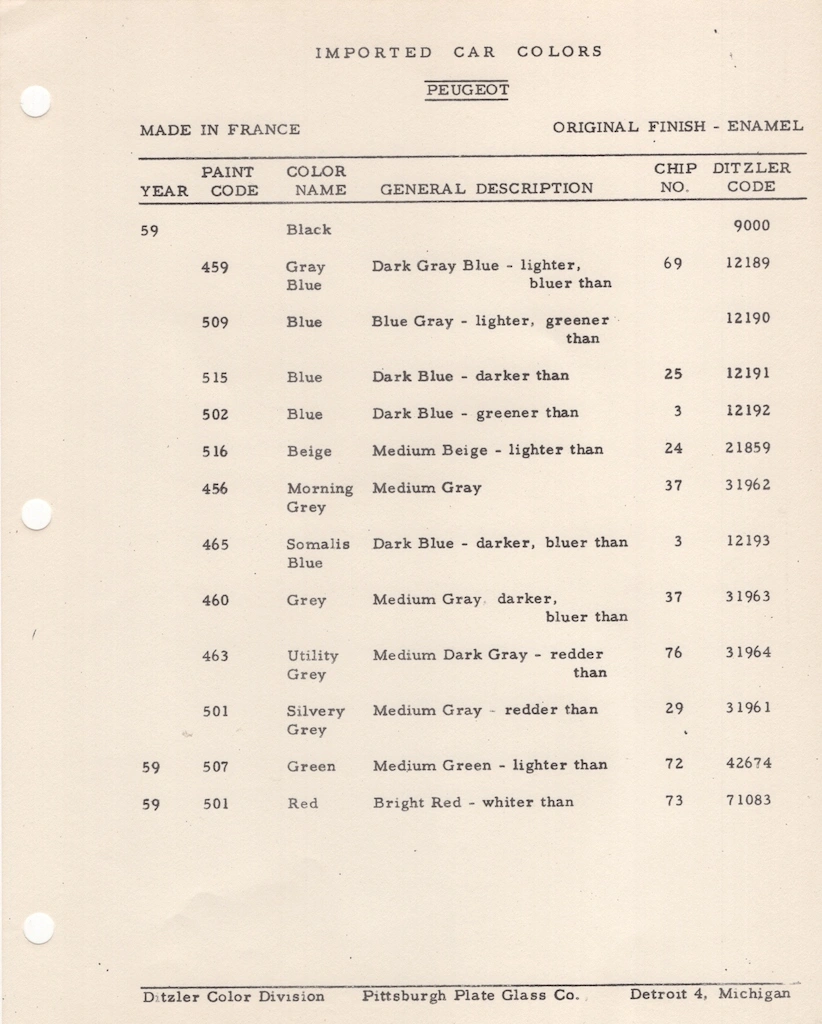
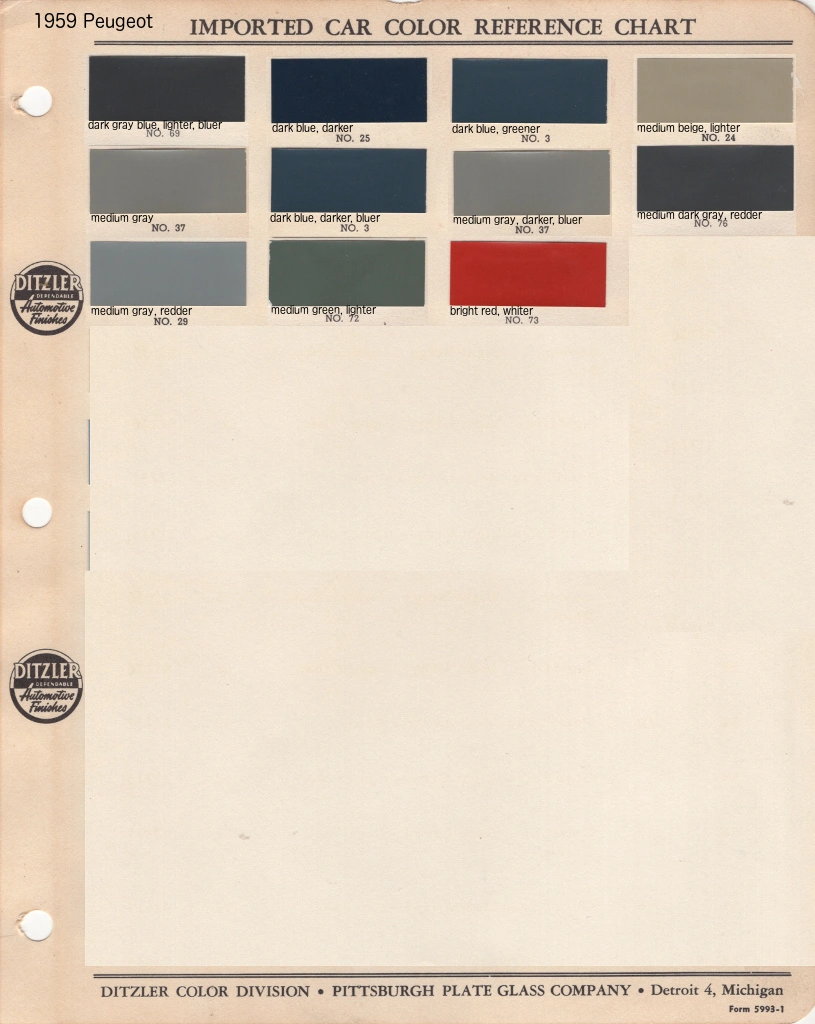
I’ve managed to track down some blue paints used by Peugeot during this time. From multiple sources. Which specific blue the Peugeot in question was, and how close the paint used on the Buchónes was, is left open as an exercise to the reader. Maybe one day factory documentation surfaces stating the actual colour, but today is not that day. My speculation is that this is likely Peugeot 502 Bleu, based on matching the Ditzler swatch #3.
| Paint code | Colour name | General Description | Ditzler Code | DULUX file no. | DUCO file no. | Ditzler Chip number | Year used |
|---|---|---|---|---|---|---|---|
| 426 | Bleu | 1955 | |||||
| 459 | Bleu | 1951 | |||||
| 465 | Somalis Blue | Dark Blue – darker, bluer | 12193 | 3 | 1955 | ||
| 502 | Gris Bleute | Dark Blue – greener | 12192 | 3 | 1956 | ||
| 509 | Bleu Île de France | 1556 | |||||
| 515 | Bleu | Dark Blue – darker | 12191 | (93) 83421 (93) 84172 | (246) 83421 (246) 8 | 25 | 1957 |
Sources
- Martínez, E. M. G. (2019). Hispano aviación HA-1112. Kagero Publishing.
- Paint Chips 1959 Peugeot. (n.d.). PaintRef.com. Retrieved May 18, 2026, from https://paintref.com/cgi-bin/chipdisplay.cgi?year=1959&manuf=Peugeot
- PPG paints. (2011). Car & Motorcycle colour Directory: For compliant paint lines. Retrieved May 18, 2026, from https://www.scribd.com/document/440236864/Ppg-Car-and-Motorcycle-Colour-Directory-2011-1
- https://code.peinturevoiture.fr/marque/147-peugeot/toutes