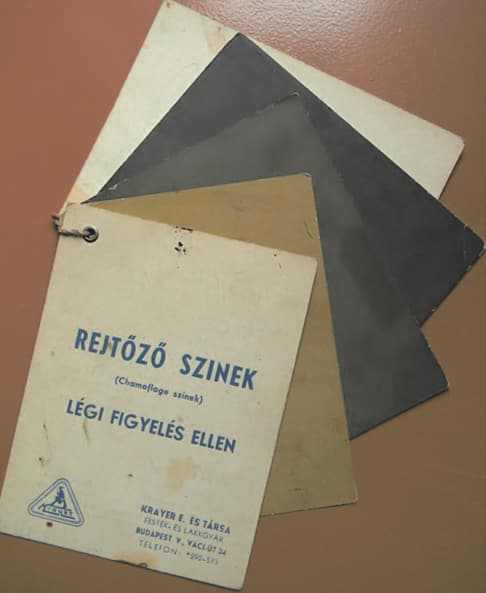
During the 2nd world war, the Hungarian Royal Air Force consisted mostly of German and Italian planes, either imported or licence build. Especially at the later stages of the war, these planes wore mostly used with the camouflage scheme they were delivered in. Hungary did however develop it’s own camouflage schemes. The paints used where of German origin, and distributed by E. Krayer and Co. Paint, Daub and Varnish Factory from at about 1938 onwards.
Research into these paints is still being done, with different sources citing different shades for colours.
Disclaimer: As with all pages of this type, the colours shown are an approximation. Monitors can change the colour displayed and don’t account for shading and glossiness. In reality these colours would also fade over time, and different batches could deviate quite a bit from the ‘official’ colour.
Krayer & Co. The Myth of Hungarian developed paints
Too long, didn’t read: Hungary did not develop it’s own paints. The G. series paints from Krayer where of German origin, and only redistributed by Krayer.
Győri Lakkgyár Durlin paints
Durlin was a line of paints distributed by Győri Lakkgyár Reichhold és Boecking (Győr1 Lacquer Factory Reichhold and Boecking). The factory was founded December 1, 1922 by the Germans industrialists Reichhold and Boecking. In 1934 the factory started producing the “Durlin” line of syntetic enamel paints. During the war the plant was classified as a plant for military production. Four of the Durlin paints were used for markings. These were according to the RAL standard.
Colour chart
The following chart provides a comprehensive overview of the paints used by the Royal Hungarian Air Force. Some of these paints were used locally (the Krayer and Durlin Paints), most were however already applied on imported aircraft.
| Krayer | Durlin | RAL | RLM | Colour | Gunze | Tamiya | Vallejo | Hataka | AK | MRP | AMMO Mig |
|---|---|---|---|---|---|---|---|---|---|---|---|
| G.1100 | N/A | RAL 7005 | RLM 63 | Grey | 71.260 | HTK-_167 | AK2331 AK11816 AK2034 RC270✝ | MRP-057 MRP-A056 | A.MIG 266 | ||
| Upper surface camouflage Krayer distribution of RAL 7005, produced by Herbig-Haarhaus A.G. | |||||||||||
| G.1101 | N/A | N/A | RLM 65 | Blue | H-067 C-115 N-067 S-115 | XF-23 | 71.255 | HTK-_029 | AK2332 AK11817 RC935 (ex. RC271✝) AK2003 | MRP-058 MRP-A057 | A.MIG 231 ATOM-20127 |
| Lower surface camouflage Krayer distribution of RLM 65, produced by Herbig-Haarhaus A.G. | |||||||||||
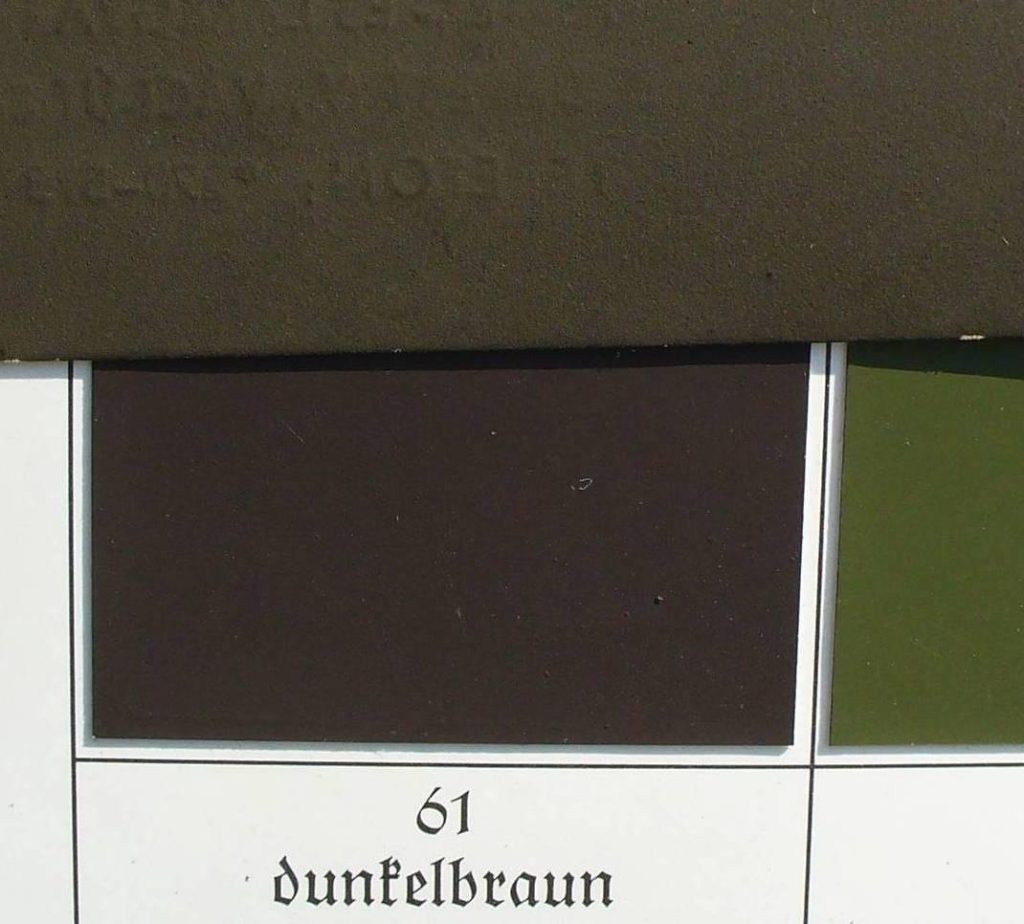
| G.1102 | N/A | RAL 8019 | RLM 61 | Dark brown | H-406 | 71.042 70.822 | HTK-_168 | AK2333 AK-11814 RC268✝ | MRP-055 MRP-A054 | ||
| Upper surface camouflage Krayer distribution of RLM 61, produced by Herbig-Haarhaus A.G. | |||||||||||
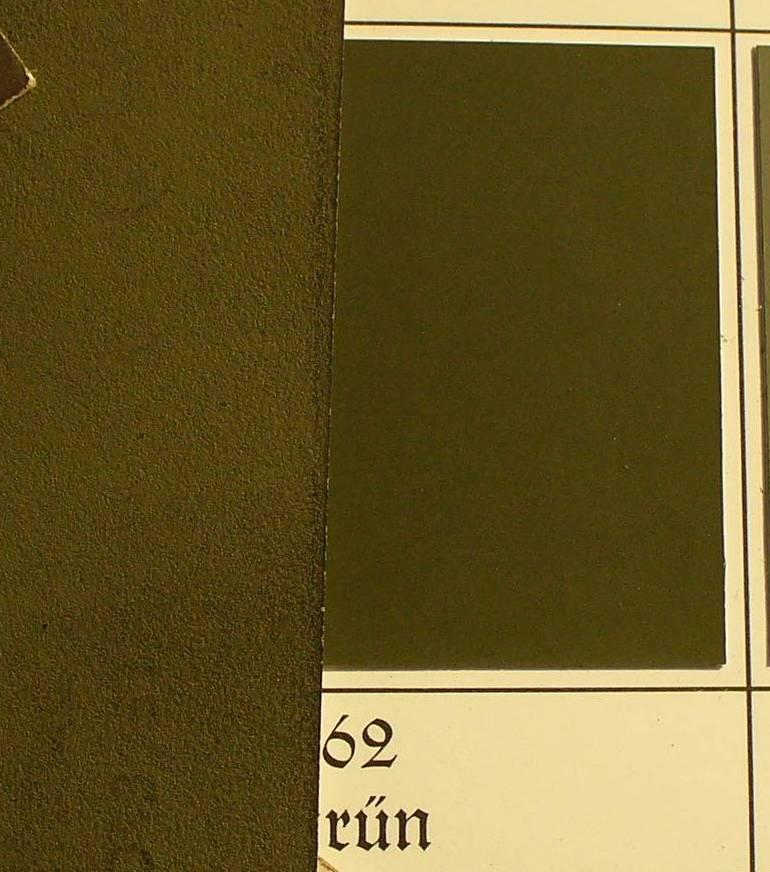
| G.1103 | N/A | RAL 6003 | RLM 62 | Green | 71.104 | HKT-_169 | AK2334 AK11815 RC269✝ | MRP-056 MRP-A055 | |||
| Upper surface camouflage Krayer distribution of RLM 62, produced by Herbig-Haarhaus A.G. | |||||||||||
| G.1114 | 15 | RAL-3001 | RLM 23 | Red | H-414 C-114 | XF-7 | 71.003 | HTK-_103 | RC005* RC811* | MRP-052 MRP-A051 | – |
| Nationality markings Krayer and Győri Lakkgyár distribution of RAL 3001 (RLM 23 in Luftwaffe service) | |||||||||||
| G.1115 | 122 | RAL 9004 | RLM 21 | White | H-011 C-062 N-011 BN-01 S-001 | XF-2 X-2 TS-26 LP-4 | 70.951 71.001 | HTK-_001 | AK11001 RC806 (ex. RC002✝) | MRP-004 MRP-A002 | ATOM-20000 ATOM-20001 A.MIG-050 A.MIG-047 |
| Nationality markings Krayer and Győri Lakkgyár distribution of RAL 9004 (RLM 21 in Luftwaffe service) Sometimes attributed to 9001 (Cream), however this seems unlikely | |||||||||||
| G.1116 | 63 | 6002 | N/A | Green | XF-2 | 70.968 | HTK-_A338 | ||||
| Nationality markings Krayer and Győri Lakkgyár distribution of RAL 6002 (No RLM equivalent in Luftwaffe service) | |||||||||||
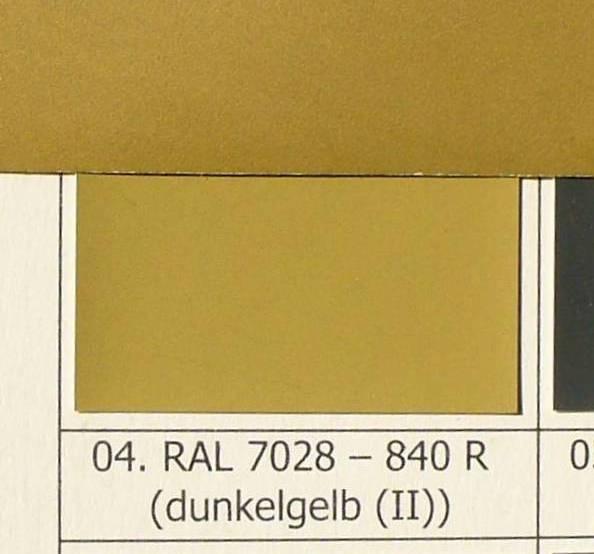
| H.1795 | N/A | RAL 7028 | N/A | Earth yellow Ochre | H-403 | XF-60 | 70.604 | HTK-_244 | AK2335 AK753 RC859 (ex. RC060✝) | MRP-037 MRP-A032 | |
| experimental upper side camouflage | |||||||||||
| C.28/A | 123 | RAL 9004 | RLM 22 | Black | H-012 C-033 N-012 | XF-1 PS5 | 71.057 | HTK-_002 | RC804* | MRP-005 MRP-A004 | ATOM-20162 |
| Insignia. Cellaetern aircraft coating Krayer and Győri Lakkgyár distribution of RAL 9004 (RLM 22 in Luftwaffe service) | |||||||||||
| C.54 | 123 | RAL 1004 | RLM 04 | Yellow | H-413 C-113 | XF-3 | AK11813 AK2091 RC934 (ex. RC267✝) | MRP-051 MRP-A050 | |||
| Cellaetern aircraft coating identification markings, spinners | |||||||||||
* = approximation (not advertised as this colour)
The following (Krayer) product codes are also known, however no exact colour exists. It does give however some insight in the primers used
| Krayer code | Product |
|---|---|
| G.1107 | Cellaetern spray kitt for wood, white |
| G.1108 | Cellaetern hole filler for plywood |
| G.1098 | Cellaetern primer, red |
| G.1099 | Cellaetern aircraft primer |
| G.1100 | Cellaetern aircraft coating, grey |
| G.1110 | Cellaetern aircraft lacquer diluent |
| G.1111 | Cellaetern Nitro kitt, light grey |
| G.1112 | Cellaetern Nitro kitt, dark grey |
| G.1114 | Cellaetern aircraft aluminium primer |
| G.1105 | Cellaetern aircraft adhesive lacquer, transparent |
| G.1106 | Cellaetern aircraft adhesive lacquer, red |
| G.1113 | Cellaetern aircraft light metal primer |
| G.1117 | Cellaetern aircraft lacquer dispersion |
| C.72 | Cellaetern aircraft coating, brown |
| C.88 | Cellaetern aircraft coating, blue |
| C.93 | Cellaetern aircraft coating, green |
Camouflage schemes
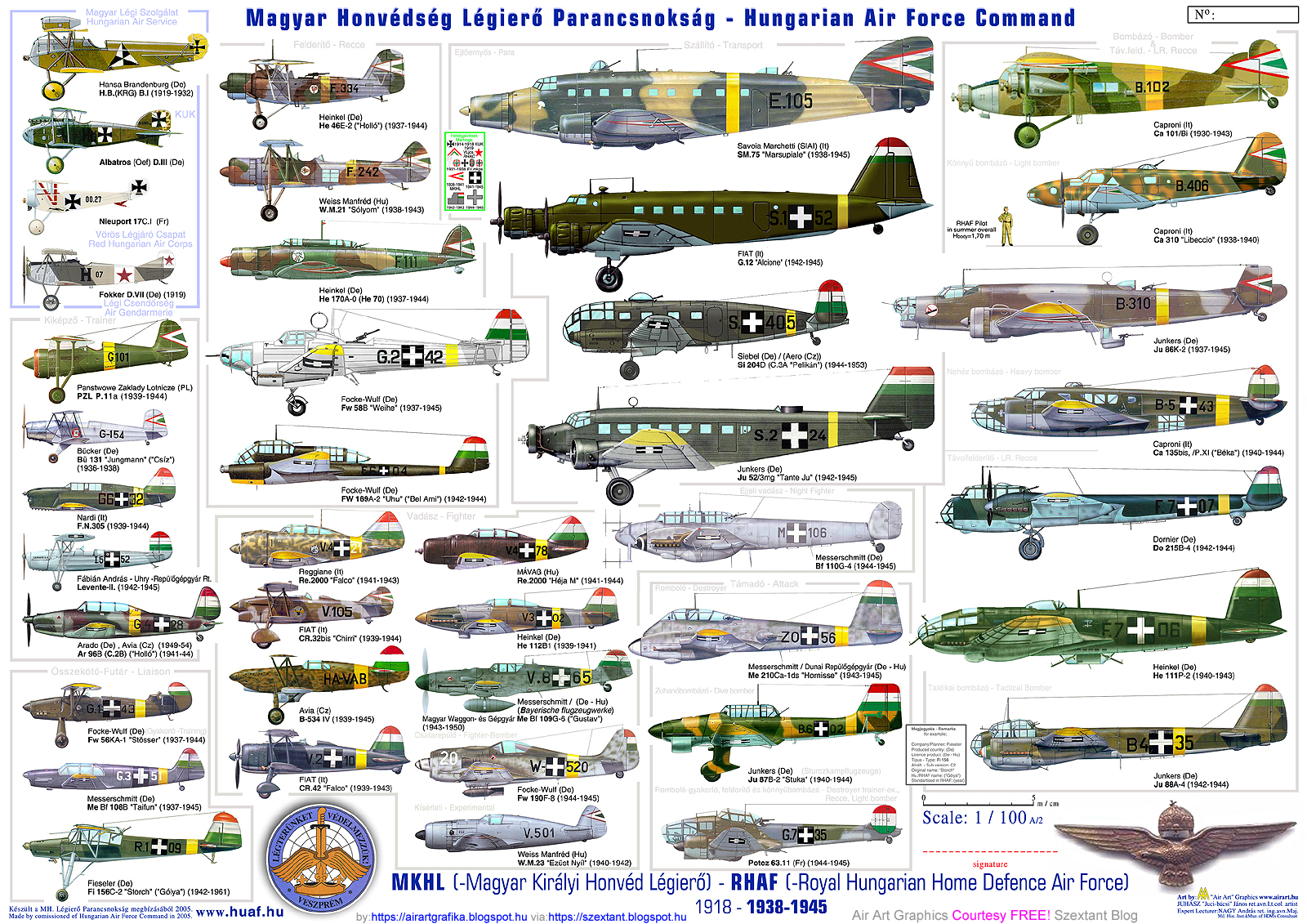
In 1938 Hungary decided to unify their aircraft camouflages. Near the end of the year the Krayer company started supplying the paints for this endeavour. The exact pattern wasn’t set yet and would finalize over a period of time. This camouflage was abandoned around 1942, when planes were left in their original camouflage.
1938-1939 Green/brown mottle
Starting October 1938, some aircraft including Fiat CR.32, started to be repainted with the new camouflage colours. These machines were mottled over with G.1102 brown and G.1103 green, still showing their original aluminium or light grey camouflage underneath. Apparently here was no uniform, regulated pattern and camouflaging was left up to the creativity of the painter.
Grey-Brown-Green over Blue scheme
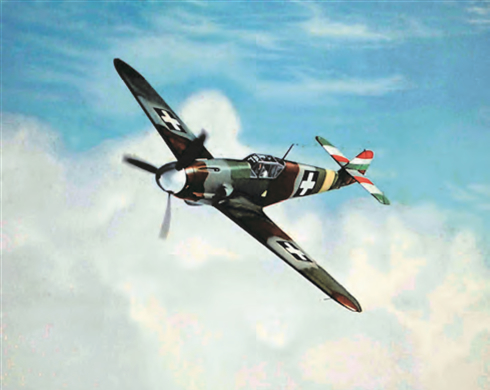
In addition to the brown and green colour, grey and blue also appeared and by the summer of 1939 the camouflage pattern had set on a wavy four tone camouflage. It consisted of G.1100 grey, G.1102 brown and G.1103 green in a wavy pattern. The underside was painted in G.1101 light blue.
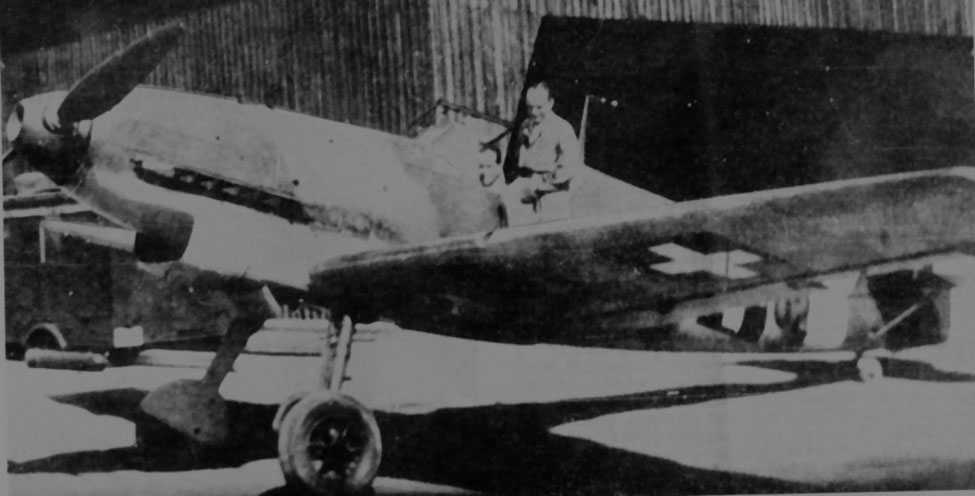
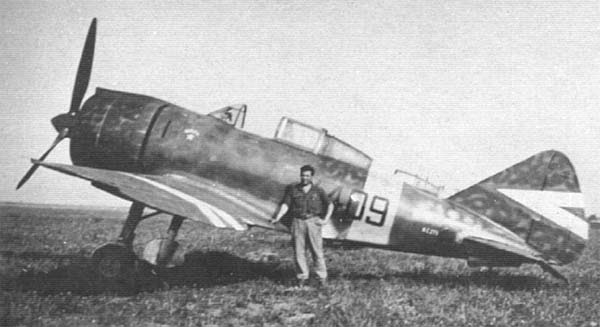
This scheme was used mostly on early war machines, such as the Heinkel He 112 and Fiat CR.32, but was also experimentally used on the Bf 109. It however fell out of use during the introduction of the cross style roundel in 1942, after which planes were kept in their original German camouflage pattern.
H.1795 yellow
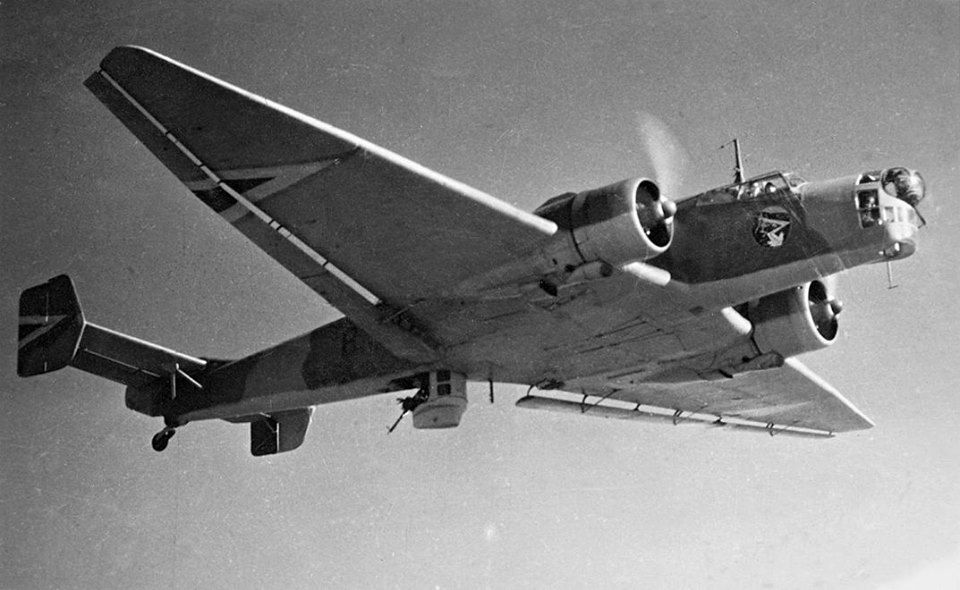
In addition to the aforementioned three upper camouflage colours, Krayer also supplied a yellow colour. While this colour is often shown on Ju-86 bombers and other aircraft, it may have been another, grey colour (such as RLM-02 or G.1100). H.1795 itself was seldom used. It is very similar, if not the same as the scheme used on Hungarian tanks of the time. To date, no actual samples have been recovered from wrecks.
Markings
Identification Number
Aircraft received a three digit identification number, prefixed with a letter indicating the purpose for which the plane was ordered. Registration numbers were allocated sequentially by aircraft type and in ascending order that followed the numerical order of the squadrons operating that type. Within each type, blocks of numbers were thus implicitly assigned to specific squadrons.
| Letter | Hungarian | English |
|---|---|---|
| V | Vadász | Fighter |
| F | Felderítö | Reconnaissance (“Exploratory”) |
| B | Bombázó | Bomber |
| G | Gyakorló | Trainer |
| I | Iskola | Basic Trainer |
Roundels
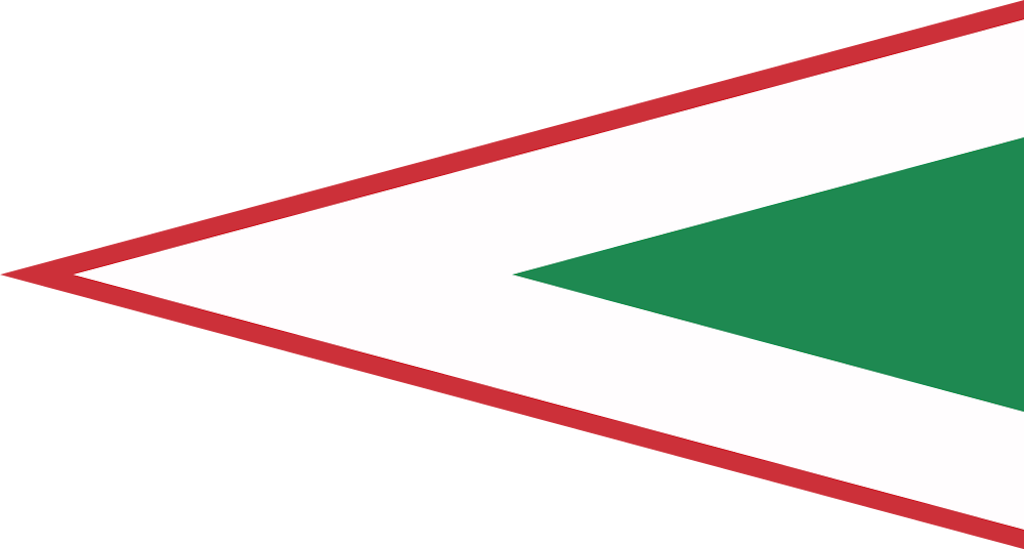 |
Chevron |
| 1938-1943 | |
| After the Hungarian air force became independent from the army, it needed a new roundel. This became the chevron roundel, applied to the tail (middle) and wings (on 7/8th length of the wing), pointing forward. If the plane had multiple tails, it was only painted on the outermost surfaces. Measured along the base, the ratio is 1/8 red, 5/8 white 1/4 green. (Decree № 30.418/1938). While the chevron was officially phased out in 1942 in favour of the new cross, it was still being applied in limited quantities as tail flash in combination with the German Balkenkreuz. This due to miscommunications or misinterpretations of the regulations. |
Cross |
||||
| 1942-1945 | ||||
 |
 |
 |
 |
 |
| Roundel | Tail and stabilizer tips |
|||
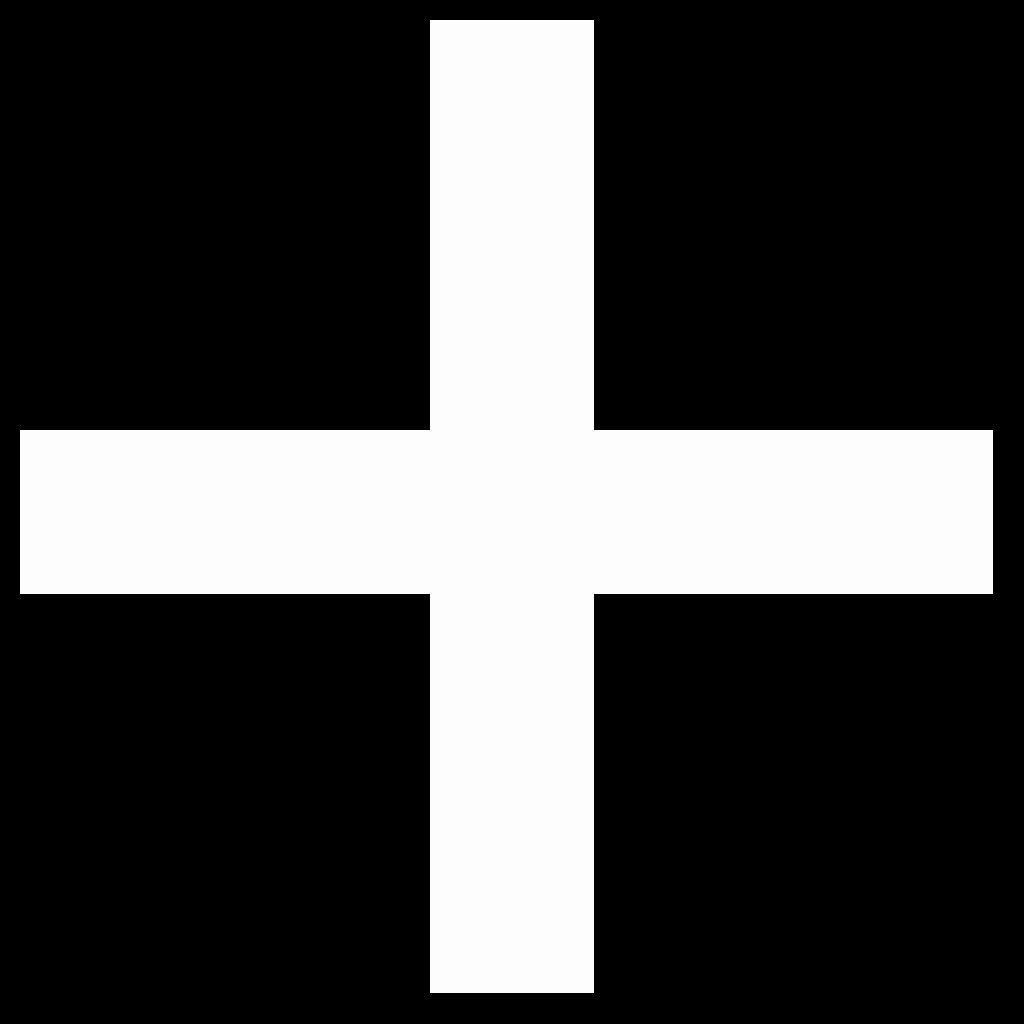
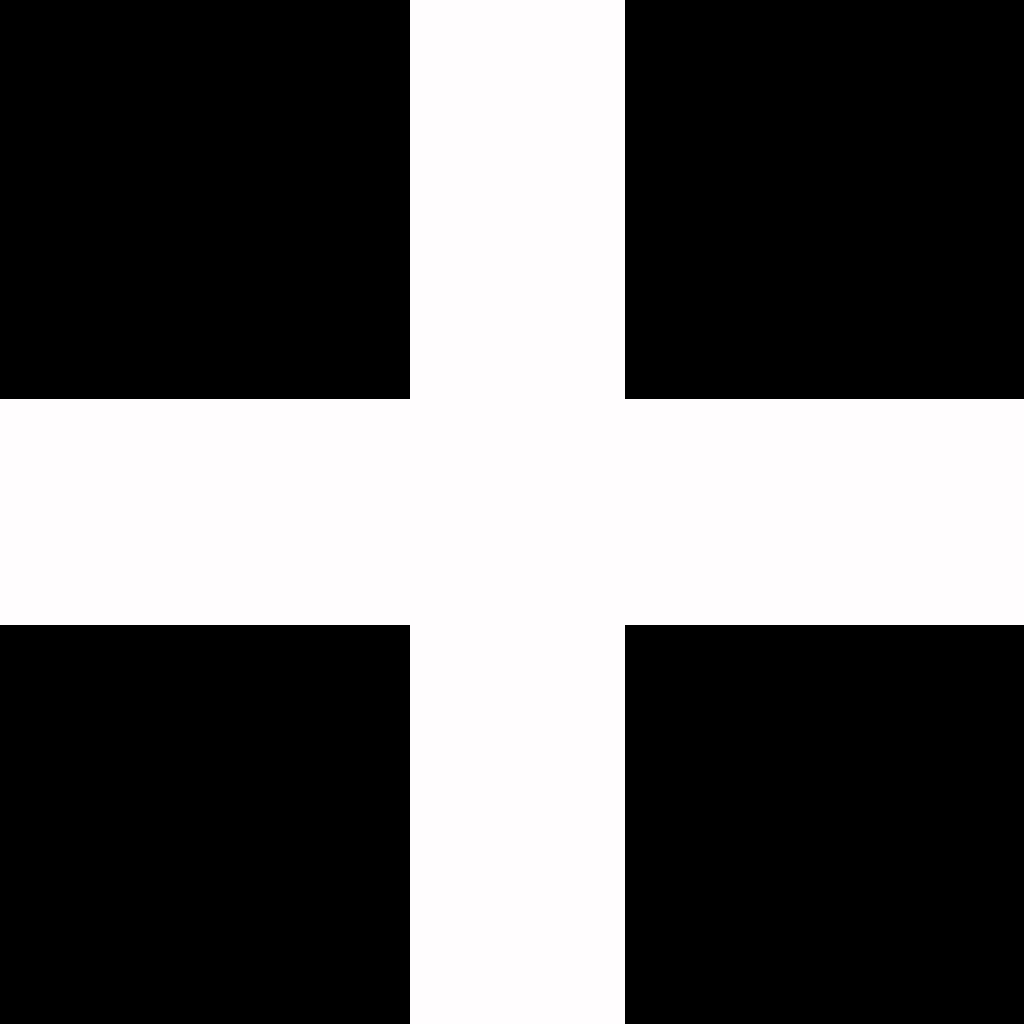
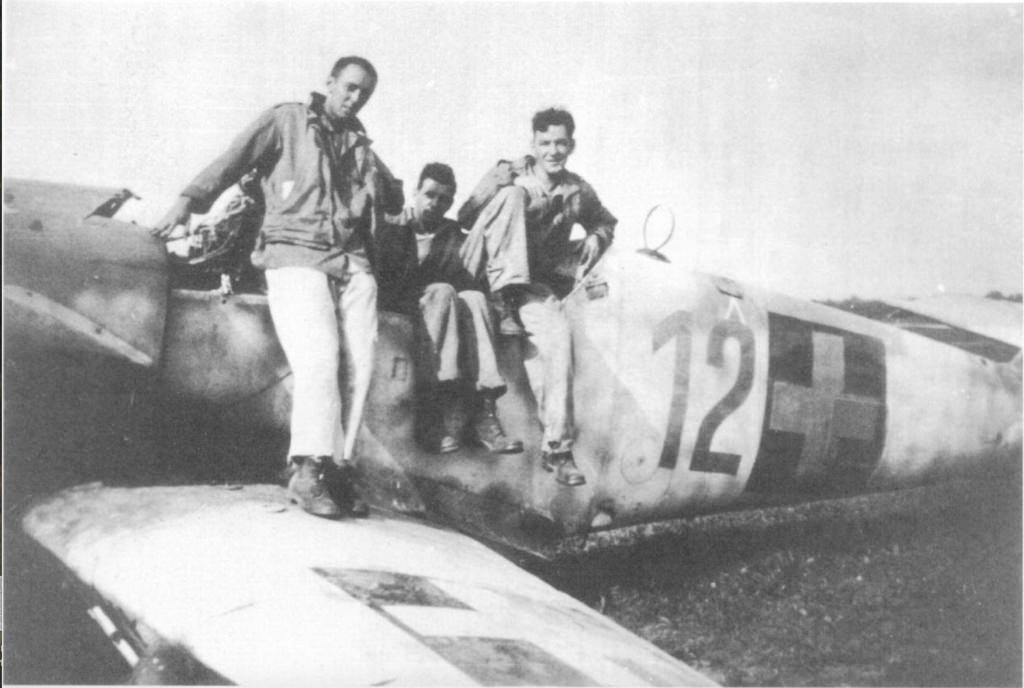
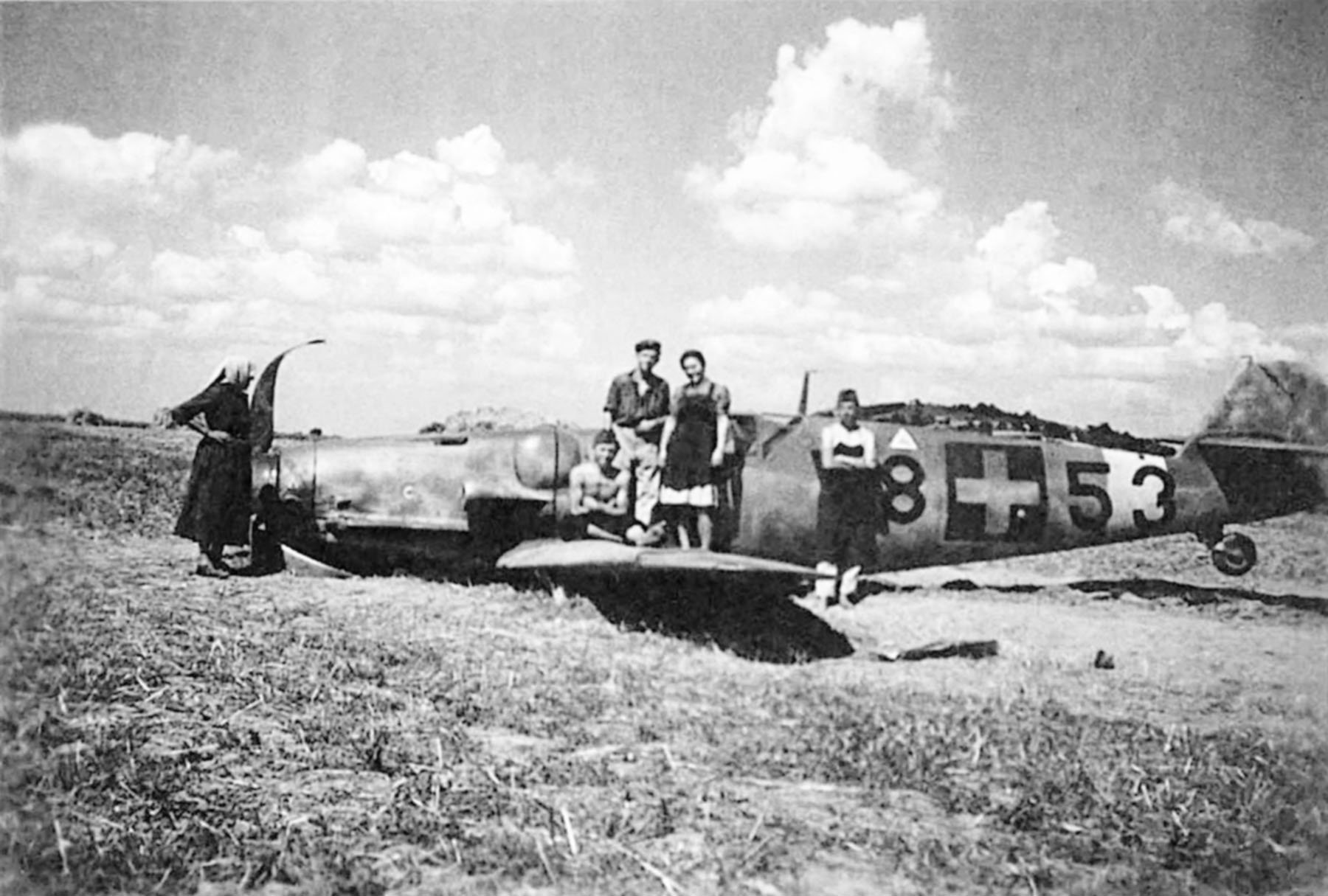
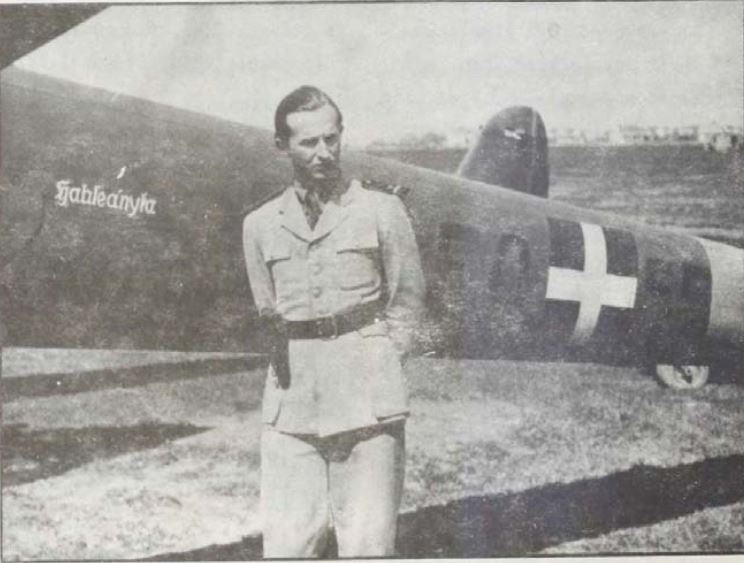
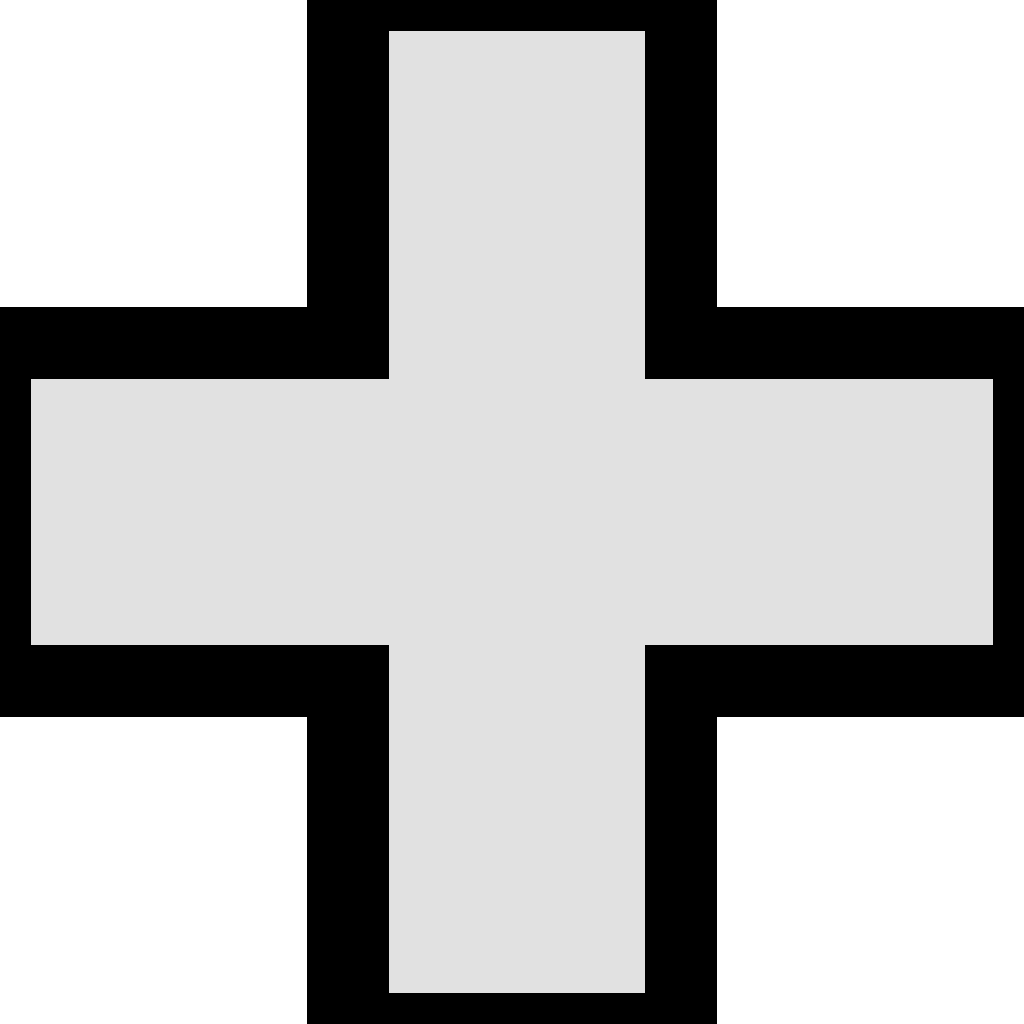
| The standard markings of the Royal Hungarian air force. During the war against the Soviet Union in 1941, the chevron marking was found to be difficult to spot, resulting in friendly fire by German pilots. As a solution, a new roundel was implemented in 1942. The size of the white cross was not defined and would widely vary between aircraft. Sometimes only the black outline was painted, showing the camouflage within the cross. The white part was also sometimes painted over to reduce visibility. In other cases the cross wasn’t bordered by black at the sides The tail and stabilizers would often feature the Hungarian flag, to keep the national identity as the roundel was pretty much the inverted German Balkenkreuz. |
||||

 |
Misinterpreted roundel |
| 1944 | |
| Wrong marking painted on some German imported aircraft due to misinterpretation of the regulations. As the roundel based around the inverse of the German Balkenkreuz, the instructions were sometimes misinterpreted as a complete inverse, without the additional black fillings. |

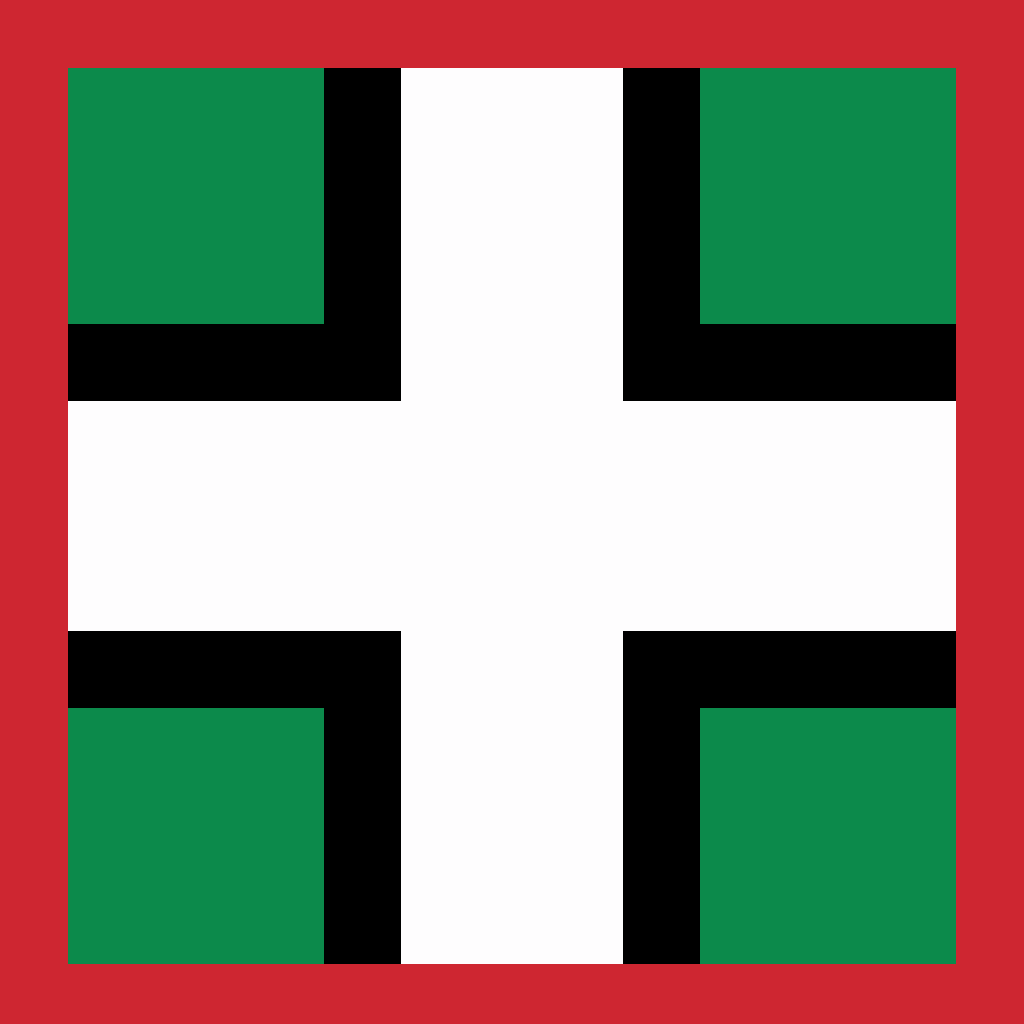 |
Alternate proposal |
| 1941 | |
| Alternate roundel proposal for replacement of the chevron. (decree № 59.120/ 1941). Experiments however showed the roundel to be difficult to recognize. No photo’s of these experiments are known. |
Sources:
- Dénes, B. and György, G. (2013). Hungarian fighter colours 1930-1945 (Vol. 1 & 2, White Series). MMPBookes. ISBN 978-8361421719 & 978-8363678210
- Dénes, B. and György, P., 2014-2015. „Magyartarka” – Lakkok, festékek, álcázószínek a Magyar Királyi Honvéd Légierő repülőgépein. Published in six parts in Haditechnika; 2014/4, 2014/5, 2014/6, 2015/1, 2015/2, 2015/3.
- Dénes, B. and György, „Magyartarka” testközelből, part 1 http://epa.oszk.hu/03000/03005/00048/pdf/EPA03005_MKL_2020_04_129-131.pdf, part 2: http://epa.niif.hu/03000/03005/00049/pdf/EPA03005_MKL_2020_05_162-165.pdf
- Egyéb, 2015. The Fighter Colours Of E. Krayer And Co. Paint, Daub And Varnish Factory. Hungarianfightercolours.com. http://hungarianfightercolours.com/the-fighter-colours-of-e-krayer-and-co-paint-daub-and-varnish-factory [Accessed 13 August 2020].
- Heimer, Ž., 2001. Hungary – Air Force. Fotw.info. https://fotw.info/flags/hu-air.html [Accessed 13 August 2020].
- Kovács, B., P., 2017. A hadijelzések és a terepszínű festés kialakulása a magyar királyi honvéd légierő vadászgépein. Katonai Logisztika 2017/1-2, p 184-219
- Győrlakk, Cégismertető. https://www.gyorlakk.hu/cegismerteto/ [Accessed 2 February 2026]
- Győr is a city in Hungary, Győri is the demonym ↩︎
Please correct the reference, it is the same
Dénes, B. and György, „Magyartarka” testközelből, part 1 http://epa.niif.hu/03000/03005/00049/pdf/EPA03005_MKL_2020_05_162-165.pdf, part 2: http://epa.niif.hu/03000/03005/00049/pdf/EPA03005_MKL_2020_05_162-165.pdf
so part 2 is omitted
J.W.Mietelski